Running Away With the Boucherie
A crowd gathered around the scene, silence greeting all present save for the slow, labored breathing of the butcher's victim.
A deep voice nearby slowly murmured a prayer, the speaker's hands clutching an aged bible as he thanked the creature for its sacrifice. Its death would mean sustenance for those who were in need - and no one, especially the one tasked with delivering the killing blow, would ever forget or dishonor it.
As the prayer ends, a gunshot rings out.
The quiet once again fills the void and everyone takes a moment to silently thank the large beast for providing nourishment, solidarity, and a lesson; this is where one's food comes from and this is the cost of survival. We had all heard the old adage of "waste not, want not."
Surrounded by these people, all talented in their respected fields, we knew there would be no waste.
The butcher readies his tools, and prepares for the grisly task that would soon be at hand as the funeral procession marches the swine toward the table that would serve as its final resting place.
Hosted by Toby Rodriguez, the crew of Lache Pas Boucherie et Cuisine, Denny and Katie Culbert, and the crew of Runaway Dish, the Runaway Boucherie is an annual event where 100+ chefs – as well as friends, family, artisans, musicians, brewers, and a slew of other people from Louisiana and beyond take part in something truly special and unique to the culture of Cajun country.
A boucherie, for those unfamiliar with the term, is equal parts feast and celebration. While that idea has certainly become the de-facto definition for some, it is also a time-honored tradition that, while once commonplace in Cajun culture, has faded from the spotlight as commercialization and convenience have overtaken our desires for quick eats and tasty treats. The boucherie's commonplace existence has waned as cultures, both Cajun and non, have become less involved in the how and the why of our food arriving on the table - and the processes involved have become incredibly more impersonal and, frankly, unnatural.
These days, the butcher is automated - and the veil is drawn over the consumer's eyes as to what exactly happens to the pigs, sheep, and other animals your average eater of the carnivore or omnivore variety consume regularly. To some, this is alright; to others, it's an atrocity. I've had many a conversation with vegetarians who have changed their ways because of the mistreatment of (and over-indulging in) our animal friends.
But, that wasn't always the case. And organizations like Runaway Dish and Lache Pas are working to reinvigorate, reeducate,and restart food communities around and beyond Louisiana with the idea that food should not only be a personal and intimate occasion but also that what we cook, what we eat, and what we enjoy should be honored and taken care of. These groups are teaching people, whether you're a chef or someone who can barely scramble an egg, that the indulgence comes from the quality of our food, not the quantity. And that the way we get that quality is to know where our food comes from and how we got it.
That is a boucherie. Without cracking a dictionary open or heading to Wikipedia (you probably did, it's okay), I can tell you what it has always been to me. The definition that my grandparents and those people I grew up around in the small town of St. Martinville, a place where boucheries are almost a yearly tradition, taught me: the tradition of a community coming together to honor what is on our plate - and to teach those that come after us how important that is. Food and its creation, before it becomes that beautiful cut of steak or well-placed chop, is gruesome, bloody, and always ends in the death of something - but that death shouldn't be faceless, robotic, or without the knowledge of the sacrifice that animal has made for the nourishment of a people. Waste not, want not is, in fact, something we have probably all heard growing up. A boucherie and other events like it are the embodiment of that phrase.
Everything from the animal is talked about and planned for ahead of time and what isn't eaten at the event itself is frozen and saved for later use. In the past, this was the common practice for the event and, while it was typically much less of a party (and incredibly more commonplace) it was still a social gathering that required the help of friends, family, and sometimes neighbors - and everyone who took part went home with something, whether it was a full belly or meat for a later meal.
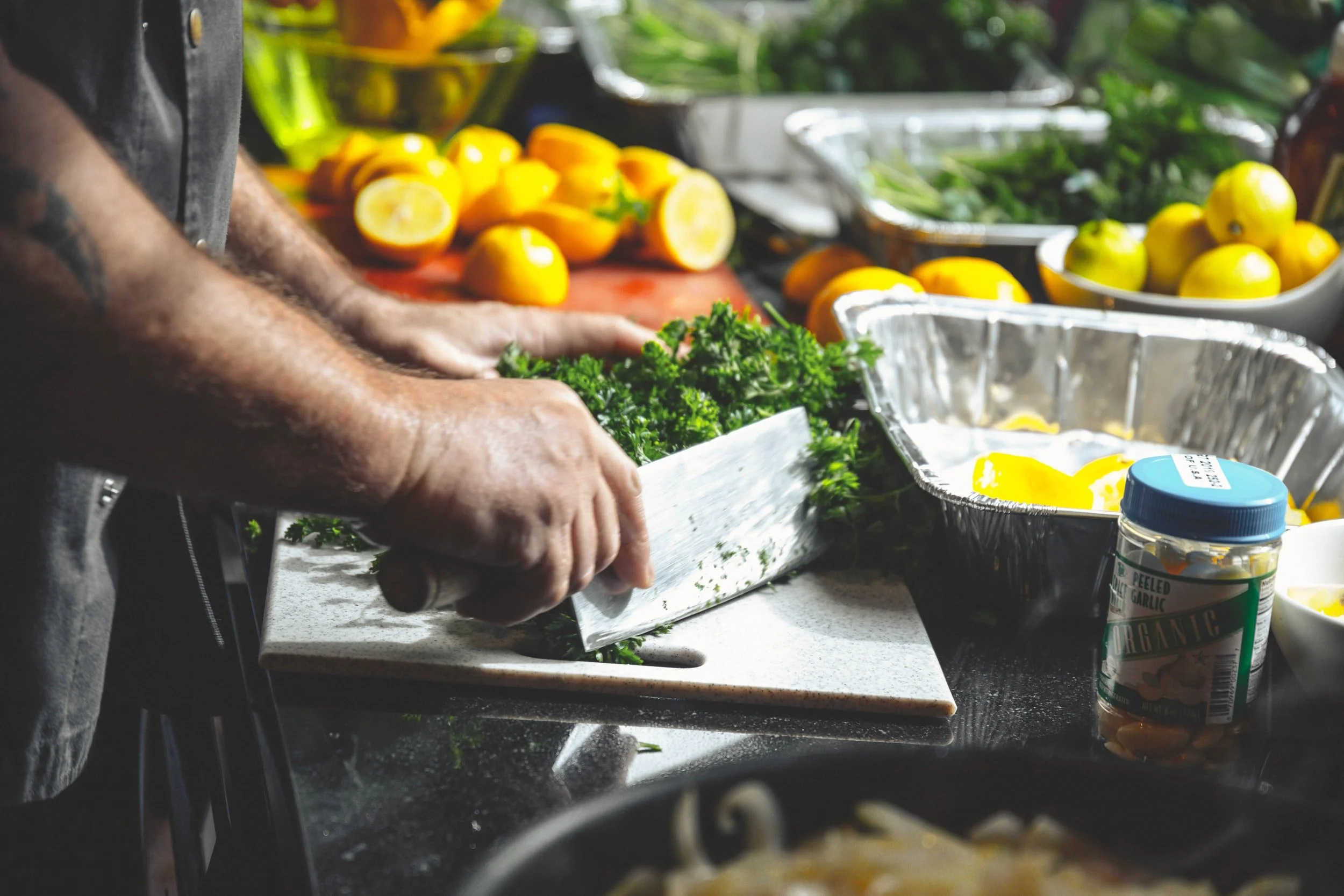
This event was no exception to that, and as the weekend event continued from mornings to nights, the animals that had been cultivated for it were used in their entirety - from nose to tail and everything in between. Fires burned around the clock as stews were cooked, cracklins (the belly and the fat of the pig cooked crispy and delicious) were fried, and spits were turned. Everyone, from artisan to amateur, was also asked to lend a hand in the process and, if you did, not only were you constantly tasting your next meal but you were working alongside seasoned veterans of their craft.
I went home knowing how to cook way more things than I did before, and with more than a few cuts on my hands.
Until this last one, I had never been a hands-on person when it came to boucheries. Granted, I was much younger and a lot less caring about the food on my plate at the last one I attended. I didn't care as much as I do now, maybe because I felt like it was someone else's problem, about where my food came from. Since then, I've grown up (at least a bit) and realized that sustainability is incredibly important not only for my own health and well-being, but for the community and the world that surrounds me. The Runaway Boucherie reminded me of that lesson - that the food that I eat is important, and that something was sacrificed to allow me to eat in the first place, whether it be a plant or an animal. Something died to allow me to live just a bit longer; to give me the energy to work, to play, and to learn.
Also, the event connected me with a community of individuals who are passionate, driven, and incredibly creative in their own rights and fields of expertise. I've never felt so inspired as I did camped out in the middle of the country sharing a bottle of whiskey with half a dozen strangers who quickly became friends, and so many more friendly and welcoming faces who accepted me as one of their own, if even for a moment.
I hope that moment never ends, those connections are never lost, and that lesson is never unlearned.